

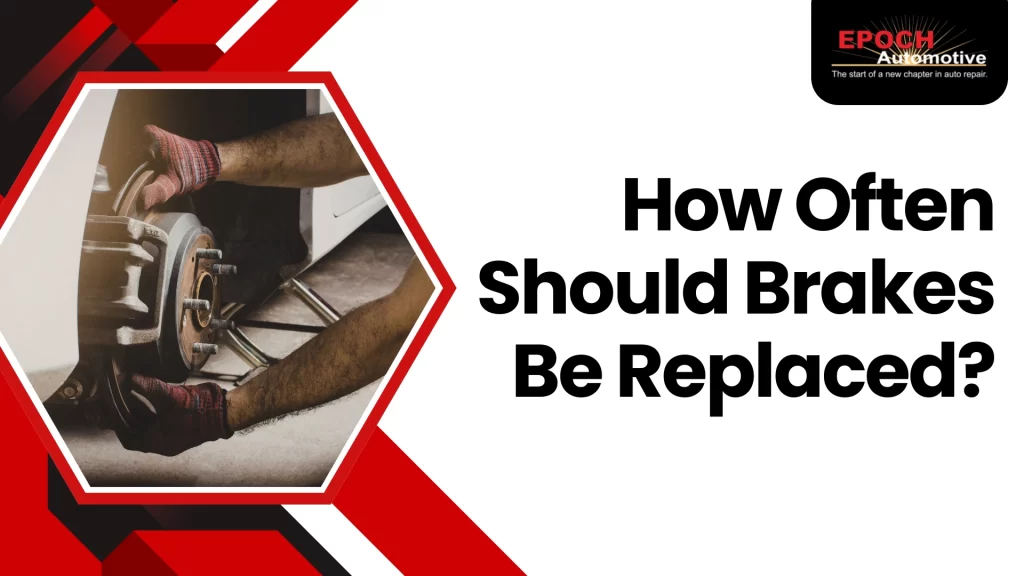
You shouldn’t replace brakes on mileage alone; you should base it on wear and symptoms. Most pads need a professional inspection by about 20,000 miles and are commonly replaced somewhere between 20,000–70,000 miles, depending on city driving, hills, towing, and braking style. Have pad thickness, rotors, and brake fluid checked at least annually. If you hear squealing, feel pulsation, or notice longer stopping distances, it’s time for service—and the next sections explain what to watch for.
How Often to Replace Brakes: The Real Answer Depends
When you ask how often brakes should be replaced, the correct interval isn’t a single mileage number—it’s a range that changes with your vehicle type, hardware, and use case.
City stop‑and‑go traffic, steep Doylestown-area hills, towing, and aggressive braking all generate more heat and friction, accelerating pad and rotor wear.
To keep safety margins intact, you need to align replacement timing with your actual conditions and braking habits, not just the odometer.
Why mileage ranges vary for different drivers and vehicles
Although most guides quote a broad “20,000–70,000 mile” window for brake replacement, the real interval varies widely based on how and where you drive, the vehicle you drive, and the parts on it.
That’s why any accurate brake pad replacement guide emphasizes inspection over guessing mileage.
Your vehicle’s curb weight, tire size, brake system design (single- vs multi-piston calipers, rotor size), and pad material (organic, semi‑metallic, ceramic) all change how often to replace brakes.
Hybrids and EVs using regenerative braking often go much farther between services than heavier SUVs towing regularly.
Because of these variables, you should rely on measured pad thickness, rotor condition, and early signs you need new brakes—noise, vibration, or longer stopping distances—rather than mileage alone.
City traffic, hills, towing, and driving habits that shorten brake life
Because brakes convert motion into heat, anything that forces you to slow down more often or more aggressively will wear them out faster—especially in stop‑and‑go city traffic, on steep hills, or while towing.
Each of these increases kinetic‑to‑thermal energy conversion at the pads and rotors, accelerating wear and raising brake fluid temperatures.
Key brake‑shortening habits and conditions include:
- Riding the brake pedal downhill instead of using lower gears
- Late, hard braking instead of smooth, progressive stops
- Frequent short trips where brakes never fully cool
- Towing or hauling heavy loads that raise required braking force
- Aggressive city driving with rapid accelerations and sudden stops
If you drive this way routinely, you’ll need more frequent inspections and likely earlier brake repair and auto brake service Doylestown PA.
Brake Pad Replacement Guide: Typical Lifespan by Brake Type
When you’re planning brake service, you need to know that front pads typically wear faster than rear pads because they handle more braking force and heat.
You’ll also want to distinguish between components that can be resurfaced or re-used—like rotors in certain conditions—and those that must be replaced once they reach minimum thickness, such as worn pads.
Understanding these patterns helps you schedule maintenance before you hit unsafe wear limits or damage more expensive parts.
Front vs rear brake pad wear differences
Front and rear brake pads don’t wear at the same rate, and understanding that difference is critical for safe, accurate maintenance planning. Under normal conditions, your front pads usually wear out 2–3 times faster because they handle most of the braking load during deceleration and emergency stops.
Key technical factors that influence front vs rear wear include:
- Brake bias: Modern vehicles are engineered with front-biased braking, loading front pads much more heavily.
- Weight transfer: During braking, vehicle weight shifts forward, increasing front axle clamping force and pad friction.
- ABS/ESC strategy: Stability systems may pulse individual rear wheels, subtly affecting rear pad wear.
- Brake system type: Vehicles with electronic parking brakes can see added rear pad usage.
- Driving profile: Towing, hills, and aggressive stops exaggerate front-rear wear differences.
Pads vs rotors; when each component needs replacement
Two key wear components in your brake system—pads and rotors—follow different replacement timelines, and mixing them up can compromise both safety and cost-effectiveness.
Pads are friction material designed to wear first; you typically replace them when the lining reaches about 3 mm, or sooner if you hear squealing, feel pulsation, or see uneven wear. Many vehicles need pads every 30,000–60,000 miles, depending on driving and pad compound.
Rotors, by contrast, are structural components with a minimum thickness spec stamped on the hat or listed in service data. You replace rotors when they’re below spec, heavily scored, cracked, rust-flaked, or causing pulsation from excessive runout.
At Epoch Automotive, technicians mic rotors and document measurements in your digital inspection before recommending replacement.
Signs You Need New Brakes Right Now
When your brakes start squealing, grinding, vibrating, or causing the vehicle to pull to one side, you’re getting early mechanical warnings that critical components may be worn or damaged.
If you notice a brake warning light, a soft or “spongy” pedal, or increasing stopping distances, your braking system’s hydraulic performance and overall safety margin are already compromised.
At this stage, you shouldn’t postpone inspection or repair, because continued driving can lead to rotor damage, brake failure, and a markedly higher stopping risk.
Squealing, grinding, vibration, or pulling while braking
Although modern brake systems are designed to be quiet and predictable, any new squealing, grinding, vibration, or pulling under braking is a critical warning that something’s wrong.
These symptoms usually indicate accelerated wear, component distortion, or contamination that can quickly compromise stopping power.
Pay attention to:
- High-pitched squeal: Often pad wear indicators contacting the rotor, signaling pads are near minimum thickness.
- Metallic grinding: Pads likely worn through to the backing plate, damaging rotors and sharply reducing braking efficiency.
- Steering wheel vibration: Possible rotor thickness variation (warping) or uneven pad deposits.
- Vehicle pulling to one side: Sticking caliper, seized slide pins, or uneven pad wear.
- Pedal pulsation (without ABS activation): Typically rotor runout or hotspots causing inconsistent friction.
If you notice any of these, schedule a professional brake inspection immediately.
Warning lights, soft pedal, or longer stopping distances
If your brake warning light comes on, the pedal suddenly feels soft or spongy, or you notice the car taking more distance to stop, you’re dealing with conditions that demand immediate attention—not a “wait and see” approach.
A red brake light can indicate low fluid, hydraulic imbalance, or an ABS fault that may compromise stability under hard braking.
A soft pedal often points to internal leaks, air in the lines, or a failing master cylinder, all of which reduce hydraulic pressure and stopping power.
Longer stopping distances can mean severely worn pads, glazed rotors, contaminated friction surfaces, or a malfunctioning ABS/ESC system.
If you notice any of these symptoms, park the vehicle as soon as it’s safe and schedule a brake inspection immediately.
What Causes Brakes to Wear Out Faster?
Your brakes can wear out much faster than expected when low-quality pads or rotors, excessive heat from repeated hard stops, and aggressive driving patterns push the system beyond its designed load.
You’re also at higher risk for rapid wear if a caliper is sticking or if contaminated or old brake fluid prevents proper pressure release, keeping pads lightly dragging on the rotors.
Understanding these root causes is critical so you can correct them early and protect both stopping distance and component life.
Low-quality parts, heat buildup, and driving patterns
Brake components don’t all wear at the same rate, and several specific factors can dramatically shorten their lifespan: part quality, heat, and how and where you drive.
Low-grade pads and rotors often use inconsistent friction materials and softer metals, so they glaze, crack, and groove sooner, reducing stopping power and increasing your risk in emergencies.
Heat is the other major enemy. Repeated hard stops, mountain driving, or towing overloads the system, raising rotor and pad temperatures until the friction layer degrades.
Key accelerators of premature wear include:
- Budget pads with low-temperature friction formulas
- Thin rotors that overheat and warp more easily
- Aggressive, late braking in city or commuter traffic
- High-speed highway driving followed by sudden stops
- Frequent driving on steep grades with heavy loads
Sticking calipers and brake fluid issues that damage pads and rotors
Beyond pad and rotor quality, the hardware that applies them can speed up wear just as quickly—especially sticking calipers and neglected brake fluid.
When a caliper seizes or its slide pins corrode, the pads don’t release cleanly from the rotor. You’ll get constant drag, overheated friction material, blue-tinted rotors, and pads worn down to backing plates on one wheel or one side of the vehicle.
Brake fluid problems accelerate this. Old, moisture-contaminated fluid boils sooner and promotes internal corrosion in calipers, hoses, and ABS components.
That corrosion can cause pistons to stick or not fully return, again keeping pads applied. Regular fluid testing, flushing at proper intervals, and inspecting caliper operation during brake service help prevent rapid, uneven pad and rotor wear.
How to Make Your Brakes Last Longer
You can greatly extend brake life by using smoother, more predictive driving techniques that reduce heat and friction at the pads and rotors.
Pair that with consistent inspections—checking pad thickness, rotor condition, fluid quality, and hardware operation—to catch issues before they become safety risks or expensive repairs.
At a shop like Epoch Automotive, these routine checks are documented and measured, so you know exactly when action is required, not just “soon.”
Driving techniques that reduce unnecessary brake wear
Small changes in driving technique can greatly reduce brake wear and extend service life.
Every time you convert speed to heat with the brakes, you consume pad material and stress rotors. By managing speed proactively, you keep components cooler, more stable, and safer over time.
Consider these techniques:
- Anticipate stops: Look several vehicles ahead and ease off the throttle early instead of braking late and hard.
- Maintain safe following distances**: Reduce constant micro-braking in traffic flow.
- Use engine braking**: Downshift appropriately in automatics and manuals on descents to offload braking demand.
- Avoid left-foot braking: Prevent simultaneous throttle and brake input that overheats pads.
- Control speed on hills: Enter descents slower to minimize sustained brake application and fade risk.
> Routine inspections and maintenance that prevent expensive repairs
Driving technique only goes so far; consistent inspections and basic maintenance determine whether brake components wear evenly or fail.
You should have your brakes visually inspected at least every 6–12 months, or at each oil change. A technician will measure pad and rotor thickness, check for taper wear, glazing, heat spots, and rotor runout, and verify even pad contact.
They’ll also inspect caliper slides, dust boots, and hardware for binding that can cause dragging and premature pad failure.
Regular brake fluid testing and flushing every 2–3 years prevents moisture contamination, internal corrosion, and a soft pedal.
Catching minor leaks at hoses, lines, or master cylinders early prevents sudden loss of hydraulic pressure—and far more expensive component replacement later.
When to Schedule Auto Brake Service in Doylestown, PA
In Doylestown, PA, you should schedule brake service before you notice a problem, using mileage intervals and inspection data rather than waiting for warning signs.
Regular brake inspections allow a technician to measure pad thickness, rotor runout, fluid condition, and hardware wear so you catch issues long before they become safety risks.
Why regular brake inspections prevent surprise failures
Although your brake system is engineered with safety margins, it can only do its job if worn components are identified before they reach a critical point.
Regular inspections let a technician quantify actual wear instead of waiting for noise, vibration, or a warning light to alert you when it’s already urgent.
During a professional brake check, you’re not just getting a quick glance through the wheel. A thorough inspection will typically verify:
- Remaining pad and shoe thickness with documented measurements
- Rotor condition, runout, and minimum thickness specs
- Brake fluid level, contamination, and moisture content
- Hose and line integrity, checking for seepage, cracks, or corrosion
- Caliper, hardware, and parking brake function and free movement
Catching trends early prevents surprise failures, shortened stopping distances, and costly secondary damage.
Choosing brake repair in Doylestown, PA based on testing, not guessing
When it comes to brake repair in Doylestown, you shouldn’t wait for a grinding noise or a dashboard warning to tell you it’s time to act. You should schedule service based on objective testing, not guesswork or mileage alone.
At Epoch Automotive, technicians measure pad thickness with calibrated tools, inspect rotors for minimum thickness and runout, and check caliper operation, hardware, and brake hoses.
They also evaluate brake fluid condition, moisture content, and pedal feel, then road-test your vehicle to verify stopping performance and ABS operation. This data-driven approach lets you prioritize what’s urgent versus what’s still safe to monitor.
Book Brake Repair in Doylestown, PA at Epoch Automotive
Ready to restore full braking performance and safety? At Epoch Automotive in Doylestown, PA, you get brake service that’s measured, documented, and aligned with OEM standards—not guesswork.
Our ASE-certified technicians use precise wear readings, rotor runout measurements, and fluid testing to determine exactly what your braking system needs.
When you book brake repair with Epoch Automotive, you benefit from:
- Digital inspections with photos and measurements of pads, rotors, and hoses
- Accurate estimates before any work begins, with clear prioritization of repairs
- Proper torque specs, lubrication, and bedding procedures for new components
- Compatibility-focused service for domestic, Asian, European, and hybrid/EV platforms
- Convenient online booking, shuttle/loaner options, and text-to-pay for minimal downtime
Schedule your brake evaluation today and keep your stopping distances where they should be.
Frequently Asked Questions
How Much Does a Typical Brake Pad and Rotor Replacement Cost?
You’ll typically spend $400–$900+ per axle for pads and rotors, depending on vehicle, parts quality, and hardware. You should get a precise quote after inspection; prioritize quality components and proper torque to maintain safe stopping performance.
Do Hybrid or Electric Vehicles Need Brake Service as Often as Gas Cars?
They usually don’t need service as often because regenerative braking reduces pad and rotor wear, but you still need periodic inspections for corrosion, caliper function, and hydraulic integrity—brake systems can silently fail like a frayed rope under tension.
Can I Replace Only Front Brakes, or Must All Four Brakes be Replaced?
You can replace just the fronts if wear and measurements justify it, but you shouldn’t ignore the rears. Have pad thickness, rotor runout, and brake balance checked at Epoch Automotive to guarantee safe, even, ABS-compatible braking performance.
Will Squeaky Brakes Always Mean I Need Immediate Replacement?
They don’t always require immediate replacement, but they’re never a coincidence you should ignore. You might have dust, moisture, or wear indicators. Get pad thickness, rotor condition, and hardware inspected promptly to avoid unsafe stopping distances.
Are Aftermarket Performance Brake Pads Worth It for Daily Driving?
They’re usually not worth it for normal commuting. You’ll trade more dust, noise, and cold-stop distance for fade resistance you won’t use. You’re better off with high-quality OEM‑equivalent pads professionally installed and bedded at Epoch Automotive.
Takeaways
When it comes to brakes, you can’t rely on guesswork—you need careful, consistent checks. By spotting squeals, shudders, or soft pedals early, you prevent costly, compounding damage and protect critical stopping performance. Schedule regular inspections, stick to proper service intervals, and choose a shop that specializes in modern brake systems. When you’re ready, book brake service at Epoch Automotive; visit us at 243 Harvey Ave Suite 102, Doylestown, PA 18901 so you’ll stop surely, safely, and smoothly on every drive.