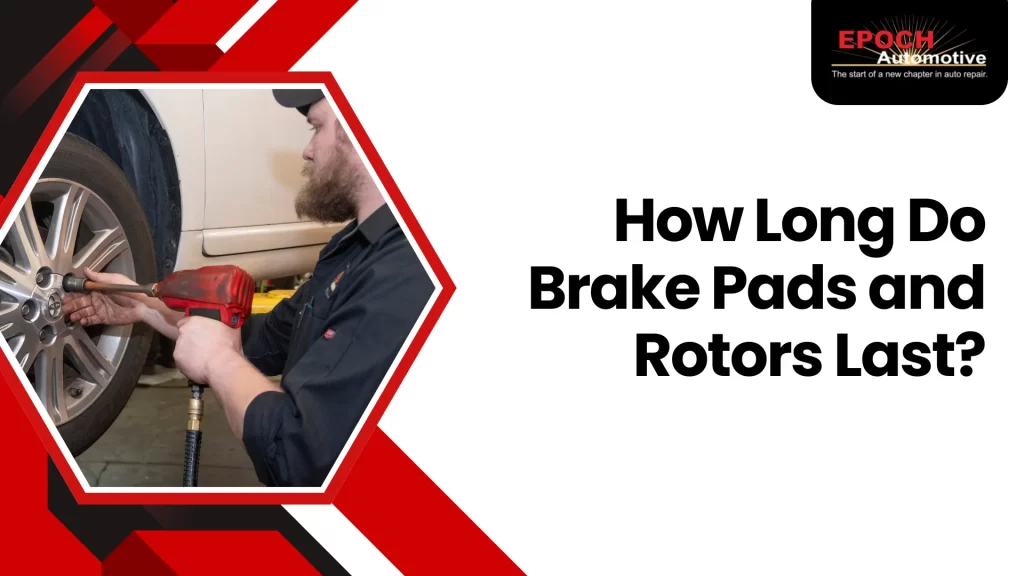
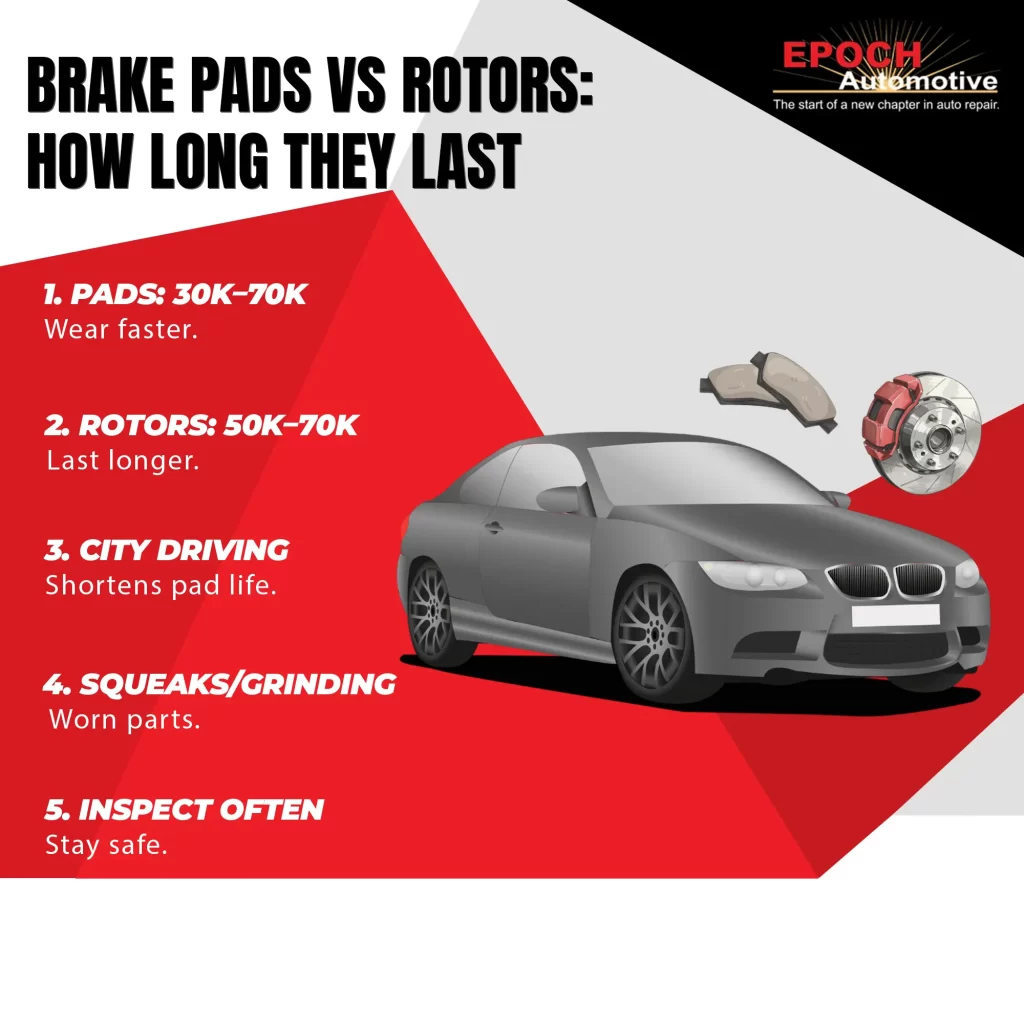
Brake pads typically last between 30,000 and 70,000 miles, while rotors usually need replacement every 50,000 to 70,000 miles. Your driving habits play a significant role in this; city driving can wear out brakes faster than highway driving. Regular inspections and maintenance can help extend their lifespan. If you’re curious to learn more about signs of wear and how to keep your brakes in top shape, you’ll want to keep going.
Key Takeaways
- Brake pads typically last between 30,000 and 70,000 miles, influenced by driving habits and vehicle type.
- Softer materials in brake pads cause them to wear out faster than rotors, which last 50,000 to 70,000 miles.
- Stop-and-go traffic can reduce the lifespan of brake pads to around 30,000 miles due to increased wear.
- Regular inspections every 10,000 to 15,000 miles help monitor brake pad condition and ensure safety.
- Signs like squeaking, grinding, or reduced responsiveness indicate worn pads or rotors needing immediate attention.
Average Lifespan of Brake Pads and Rotors
When it comes to your vehicle’s brakes, knowing the average lifespan of brake pads and rotors can help you stay ahead of maintenance. Typically, brake pads last between 30,000 and 70,000 miles, while rotors usually have a lifespan of around 50,000 miles. Keeping an eye on these parts can help ensure your safety and performance on the road.
Average brake pad lifespan in miles
On average, brake pads last between 30,000 and 70,000 miles, depending on driving habits and vehicle type. If you frequently drive in stop-and-go traffic or use your vehicle for towing, you might find that your brake pads wear out closer to the 30,000-mile mark. Conversely, if you drive more conservatively and maintain your vehicle well, you could reach the upper end of the spectrum. It’s essential to keep an eye on your brake pad condition, as worn pads can lead to decreased braking performance and potential damage to your rotors. Regular inspections can help you gauge the average brake pad lifespan in miles for your specific vehicle and driving style. Make sure to take care of them!
How long brake rotors usually last
Brake rotors typically last between 50,000 and 70,000 miles, but this can vary based on factors such as driving style and the type of vehicle. If you’re a frequent driver in stop-and-go traffic or tend to brake hard, you may find that your rotors wear out faster. Heavy vehicles or those used for towing might also experience reduced lifespan. Regular maintenance and inspections can help you gauge how long brake rotors usually last on your car. Keep an eye on any signs of wear, such as vibrations or squeaking sounds, as these could indicate it’s time for a replacement. Ultimately, staying proactive about your brakes is vital for your safety and your vehicle’s performance.
Signs Your Brake Pads or Rotors Are Worn Out
If you’re hearing a squeaking or grinding noise when you brake, it might be time to check your brake pads or rotors. You may also notice a vibration or pulsation when applying the brakes, which can indicate warped rotors. Recognizing these signs early can help prevent more serious issues down the road.
Squeaking or grinding noise when braking
Whenever you hear a squeaking or grinding noise while braking, it’s a clear sign that your brake pads or rotors might be worn out. This noise often indicates that your brake pads have become too thin, exposing the metal backing, which can lead to damage. If you ignore this warning, you risk further damaging your rotors, leading to more costly repairs. It’s essential to address these sounds promptly. Regularly checking your brakes and replacing pads as needed can save you money and guarantee your safety on the road. If you notice any unusual sounds, don’t hesitate to consult a trusted mechanic to assess the situation and recommend the best course of action. Your brakes are critical for your vehicle’s safety.
Brake vibration or pulsation from warped rotors
Experiencing vibration or pulsation in your steering wheel when you brake can be a troubling sign that your rotors may be warped. This brake vibration or pulsation from warped rotors often occurs when the brake pads make uneven contact with the surface of the rotor. As you apply pressure to the brakes, you might feel the steering wheel shake, which can be unnerving and indicate a more significant issue. Ignoring this symptom can lead to reduced braking efficiency and further damage. If you notice this sensation, it’s essential to have your vehicle inspected by a professional. Addressing warped rotors promptly can improve your braking performance and guarantee your safety on the road. Don’t wait—get it checked out!
When to Replace Brake Pads vs. Rotors
When it comes to your brakes, it’s crucial to know when to replace the pads versus the rotors. Brake pads typically wear out faster due to their direct contact with the rotor, which means you’ll likely need to replace them more often. Keeping an eye on recommended service intervals can help you maintain peak braking performance and safety.
Why pads wear faster than rotors
Although brake pads and rotors work together to guarantee effective stopping power, it’s the pads that tend to wear out faster. This is mainly due to the materials used; brake pads are designed to be softer, allowing them to grip the rotors effectively. However, this softness means they wear down quickly, especially under heavy braking or frequent stop-and-go situations. Additionally, the pads are more exposed to heat and friction, which accelerates their deterioration. Regular brake inspections and replacements in Doylestown, PA, can help you monitor their condition and verify that your braking system remains effective. By paying attention to your brake pads, you’ll not only enhance safety but also extend the lifespan of your rotors in the long run.
Recommended brake service intervals
Knowing when to replace your brake pads and rotors is essential for maintaining vehicle safety and performance. To guarantee your brakes function effectively, follow the recommended brake service intervals. Typically, you should inspect your brake pads every 10,000 to 15,000 miles and consider replacing them between 30,000 and 70,000 miles, depending on your driving habits. Rotors generally last longer, needing inspection every 20,000 miles and replacement between 50,000 and 70,000 miles. However, if you notice squeaking, vibration, or a longer stopping distance, it may be time to act sooner. Regular inspections at your trusted auto repair shop can help you stay on top of these intervals, keeping your vehicle safe and reliable on the road.
Factors That Affect Brake Wear
When it comes to brake wear, several factors can influence how long your pads and rotors last. For instance, city driving often leads to more frequent stops, increasing wear compared to highway driving. Additionally, the type of brake pads you choose, like ceramic or semi-metallic, can also affect their lifespan.
City driving vs. highway driving brake wear
As you navigate the roads, the type of driving you do—whether city or highway—can significantly impact the wear on your brake pads and rotors. City driving often involves frequent stops and starts, which means your brakes work harder and wear out faster. The constant braking can generate more heat and friction, leading to quicker degradation of your brake components. On the other hand, highway driving generally means less frequent braking, allowing your brakes to cool down more effectively. This typically results in less wear and a longer lifespan for your brake pads and rotors. Understanding city driving vs. highway driving brake wear can help you anticipate maintenance needs and extend the life of your braking system.
Ceramic vs. semi-metallic brake pads lifespan
While both ceramic and semi-metallic brake pads are designed to provide reliable stopping power, their lifespan can vary considerably based on several factors. Generally, ceramic pads tend to last longer, often between 30,000 and 70,000 miles, thanks to their lower wear rate and heat resistance. On the other hand, semi-metallic pads usually wear out faster, typically lasting around 25,000 to 50,000 miles due to their composition, which includes metal fibers that enhance stopping power but can also lead to quicker wear. Your driving habits, vehicle type, and environmental conditions also play significant roles in determining the ceramic vs semi-metallic brake pads’ lifespan. Choosing the right pad for your needs can help maximize performance and longevity.
How to Extend the Life of Your Brakes
To extend the life of your brakes, you need to focus on preventive inspections and adopt good driving habits. Regular maintenance can also make a big difference in how long your brake pads and rotors last. By being proactive, you’ll not only enhance your vehicle’s performance but also save on costly repairs down the road.
Preventive inspections and proper driving habits
Regular preventive inspections and good driving habits can significantly extend the life of your brakes. Make it a habit to have your brakes checked regularly by a trusted technician, like those at Epoch Automotive. They’ll catch any issues before they escalate, ensuring your system’s in top shape. Additionally, practice proper driving habits—avoid sudden stops, and anticipate traffic signals to minimize wear. Keeping a safe distance from the vehicle ahead can also help reduce the need for frequent braking. By combining preventive inspections and proper driving habits, you’re on the right track for extending brake life with proper maintenance. Remember, a little attention today can save you time and money on repairs down the road.
Extending brake life with proper maintenance
By ensuring your brakes receive proper maintenance, you can significantly extend their lifespan and enhance your vehicle’s safety. Regular inspections are vital; they help identify issues before they escalate. Keep an eye on brake fluid levels and replace them as needed to prevent corrosion. Also, practice smooth driving habits—avoid sudden stops and aggressive acceleration. This not only saves your brakes but also improves fuel efficiency. When it’s time for service, trust a complete brake service at Epoch Automotive. Our ASE-certified technicians will assess and maintain your braking system effectively. Remember, extending brake life with proper maintenance is all about being proactive. By investing a little effort now, you’ll save money and guarantee safer driving down the road.
Schedule a Brake Inspection or Replacement at Epoch Automotive
If you notice any signs of brake wear, such as squeaking or reduced responsiveness, it’s essential to schedule a brake inspection or replacement at Epoch Automotive. Our ASE-certified technicians will perform a thorough brake safety check at Epoch Automotive to identify any issues and guarantee your vehicle’s braking system is in top condition. We recognize that brake problems can be stressful, which is why we offer transparent pricing and a welcoming atmosphere. With convenient online booking and text-to-pay options, getting your brakes serviced is a hassle-free experience. Don’t wait until it’s too late; prioritize your safety by trusting us with your brake maintenance needs. Schedule your appointment today to keep your brakes performing at their best!
Frequently Asked Questions
Can Driving Habits Influence Brake Pad and Rotor Lifespan?
Yes, your driving habits can notably influence brake pad and rotor lifespan. Frequent hard braking, aggressive acceleration, and stop-and-go traffic can wear them out faster, while smooth, cautious driving tends to prolong their life.
How Often Should I Have My Brakes Inspected?
Picture the smooth hum of your vehicle gliding down the road. You should have your brakes inspected at least once a year or whenever you hear unusual noises, ensuring your ride stays safe and sound.
Are There Differences in Brake Longevity Between Vehicle Types?
Yes, there are differences in brake longevity between vehicle types. Heavier vehicles like trucks typically wear brakes faster than lighter cars. Factors such as driving habits and terrain also affect how long your brakes last.
What Materials Are Brake Pads and Rotors Commonly Made From?
You might be surprised to learn that brake pads are often made from materials like ceramic, metallic, or organic compounds, while rotors typically use cast iron or carbon composites. Each choice affects performance and longevity.
Do Weather Conditions Affect Brake Wear Rates?
Yes, weather conditions can affect brake wear rates. Extreme heat or cold can lead to faster degradation, while wet conditions may cause rust or corrosion, impacting performance. Regular inspections can help you stay ahead of potential issues.
Conclusion
Just like a knight needs a sturdy shield to protect against foes, your vehicle relies on strong brake pads and rotors to keep you safe on the road. By understanding their lifespan and recognizing the signs of wear, you become the guardian of your own driving destiny. Don’t wait for the battle to begin—take proactive steps to maintain your brakes. Schedule a brake inspection at Epoch Automotive and guarantee your chariot is always ready for the journey ahead.