Brake Repair and Safety Inspection in Doylestown, PA
Brake Repair and Safety Inspection Services for Doylestown Drivers
Brake repair in Doylestown, PA, covers the entire hydraulic and friction system on your vehicle. Services include pad and rotor replacement, caliper service, brake fluid flushes, ABS module diagnostics, and PA state safety inspection sign-off.
Epoch Automotive is a general repair shop serving Doylestown, Warrington, Chalfont, and New Hope. Brake work is one of the most common repairs we see because of how the local terrain punishes friction components.
The hilly stretches through Bucks County, and the daily commuter grind on Route 611 and Route 202 wears pads and rotors faster than flat, open-road driving. Every brake job is documented with photograph-based Digital Vehicle Inspections and backed by a written estimate before we touch a wrench. Qualifying repairs carry our warranty and are performed by certified technicians using OEM or OEM-equivalent parts.
Brake Repair and Safety Inspection Services
The brake system on your vehicle is a connected hydraulic circuit. Brake pads press against rotors while calipers apply the pressure needed for braking. DOT 4 brake fluid transmits force from the master cylinder through the brake hydraulic line, and the ABS module modulates that pressure to prevent lockup. When one component wears or fails, it stresses everything downstream, which is why Epoch Automotive inspects the full system before recommending any single repair.
PA State Inspection
Pennsylvania’s annual safety inspection includes a documented brake condition check, along with steering, suspension, tires, lights, and exhaust. Epoch Automotive is a certified PA inspection station and pairs the inspection with photo documentation so you see exactly what passed and what did not. See PA State Inspection for what to bring and what the inspection covers.
Pre-Purchase Vehicle Inspection
Before you buy a used vehicle in Bucks County, a pre-purchase inspection tells you what the seller did not. We measure brake pad thickness, rotor runout, brake fluid condition, and hydraulic line integrity as part of the full vehicle evaluation. See pre-purchase vehicle inspection for the complete inspection checklist.
ABS Module Repair
The ABS module is the computer that modulates hydraulic pressure during hard braking to prevent wheel lockup. When it fails, you may see an ABS warning light, loss of anti-lock function, or stability control faults linked to the same system. The most common cause on higher-mileage vehicles is internal solenoid corrosion or a failed wheel speed sensor feeding bad data into the module.
Winter road salt on Route 611 and secondary roads through Warrington can accelerate connector corrosion at the wheel hub assembly. This issue is often mistaken for a bad module when the actual fault is located upstream.
We use the Autel Diagnostic Scan Tool to pull stored codes and review live wheel speed data during a road test. This helps confirm whether the module itself is at fault or whether a sensor, harness, or connector is the actual source. Repair paths range from harness and connector cleanup to wheel speed sensor replacement to full ABS module replacement with programming when the internal circuitry has failed.
Brake Caliper Repair
A sticking caliper causes uneven pad wear, pulling under braking, and in bad cases, a burning smell or a glowing rotor after a long descent. The underlying cause is usually a seized piston, corroded slide pins, or a torn dust boot letting moisture into the piston bore. Repeated braking down the grades on Route 202 generates significant heat in the calipers. When they cannot release cleanly, the pad drags against the rotor and destroys both.
Diagnosis starts with a pad-wear comparison side-to-side and a caliper temperature check after a road test, then a physical inspection of the slide pins and piston travel. Depending on what we find, the repair path may involve a caliper rebuild with new seals and pins. Full caliper replacement is recommended when the piston bore is pitted beyond service.
Brake Fluid Flush
DOT 4 brake fluid is hygroscopic, meaning it absorbs moisture from the air. Once fluid moisture content passes about 3%, the boiling point drops, and the brake pedal can feel soft during hard braking. The symptom is a spongy pedal, a longer travel before the brakes bite, or, in worst cases, fluid boiling during a long downhill run. Bucks County’s freeze-thaw cycles can increase moisture exposure in the brake fluid over time, which is why we test brake fluid condition at every service.
Diagnosis is a simple moisture test strip or refractometer reading on fluid drawn from the master cylinder. The repair path is a full system flush, pushing clean DOT 4 through each caliper in the correct sequence until the fluid runs clear at all four wheels.
Brake Rotor Replacement
Rotors can develop issues from repeated heat cycles, wear thin over time, or form hard spots caused by a sticking brake pad. These problems often lead to a pulsing brake pedal or steering wheel vibration during braking. On descending grades through New Hope and along Route 611, sustained braking can generate significant heat in the rotors. Excessive heat buildup can contribute to rotor distortion and braking concerns over time.
We measure rotor thickness against the manufacturer’s minimum specification and check runout on the wheel hub assembly before deciding between resurfacing and replacement. If the rotor is above minimum thickness and runout is within spec, we can machine it. Below that, replacement is the only safe path.
Every rotor replacement includes new pads and hardware because reusing partially worn pads against a new rotor produces uneven bedding and premature noise.
Parking Brake Repair
Parking brakes fail in two ways: the mechanical cable stretches or seizes on drum-in-hat systems, or the electronic actuator fails on modern electronic parking brake platforms. Symptoms include a parking brake that will not hold on an incline, a warning light on the dash, or a brake that will not release electronically. Winter road salt corrodes cable housings on older vehicles, which is a common finding on trucks and SUVs used through Bucks County winters.
We inspect cable travel, actuator function, and stored fault codes before recommending a repair. On electronic brake systems, the caliper piston must be retracted through the scan tool before rear pad service. Skipping this step can damage the actuator, which is a detail frequently missed during DIY brake jobs.
Brake Line Repair
Steel brake hydraulic lines corrode from the outside in, especially where they pass near the wheel wells and undercarriage. A leaking line produces a soft pedal, a puddle of clear fluid under the vehicle, and eventually a hard brake failure when pressure cannot be maintained. Bucks County road salt is a major contributor to brake line corrosion. We commonly see line failures on vehicles over ten years old that spend winters on Route 611 and county roads through Warrington and Chalfont.
Diagnosis is a visual inspection under the lift, plus a pressure hold test at the master cylinder to identify slow leaks not yet dripping. Brake line repair involves replacing the affected section with new steel or nickel-copper line, then flaring and bending it to match the original routing. A full system bleed is completed to remove any air introduced during the repair.
Noise, Vibration, and Diagnostic Concerns
Brake symptoms can provide clues about which part of the system may be failing. An accurate diagnosis matches the symptom to the actual cause rather than relying on guesswork. Epoch Automotive confirms the source before recommending parts.
Squealing or Grinding Noise
A high-pitched squeal usually means the pad wear indicator is contacting the rotor, warning you that the friction material is nearly gone. Grinding is worse: it means the pad is fully worn through and the backing plate is now cutting into the rotor.
Pulsing Pedal or Steering Wheel Shake Under Braking
A pulsing pedal or wheel shake that only appears when you brake is almost always uneven rotor thickness or warping, not a suspension issue. The cause is often repeated heat cycles from sustained braking on grades like those along Route 202 and Route 611. A stuck caliper can add extra heat on one side and accelerate the issue.
Soft or Spongy Brake Pedal
A pedal that sinks toward the floor or feels spongy can point to several brake system issues. These include moisture-contaminated DOT 4 brake fluid, air in the hydraulic system, or a leak somewhere in the brake hydraulic line. A pressure hold test at the master cylinder confirms whether the loss is external (a leak) or internal (a failing master cylinder seal).
Pulling to One Side When Braking
Pulling under braking points to a sticking caliper, uneven pad wear, or a partially collapsed brake hose restricting flow to one wheel. A caliper temperature check after a road test and a side-to-side pad thickness comparison identifies the source before parts are ordered.
ABS or Brake Warning Light On
An illuminated ABS or brake warning light indicates that the system has stored a fault code. Common causes include a wheel speed sensor signal dropout, low brake fluid, or a parking brake switch fault. We use the Autel Diagnostic Scan Tool to pull the stored code and review live data before deciding on a repair path.
Concerned about these symptoms? Request a Diagnostic Inspection Today
How We Approach Brake Repair and Safety Inspection
Every brake job at Epoch Automotive starts with a road test. The technician drives the vehicle at low and highway speeds and applies the brakes during different conditions. They listen for noise, feel for pulsation, and check whether the vehicle tracks straight under braking. That road test information guides the inspection before the wheels come off.
On the lift, we measure pad thickness against the manufacturer’s minimum, check rotor thickness with a micrometer, and measure rotor runout. We also test brake fluid moisture content and inspect every hydraulic line and hose for corrosion or weeping.
Caliper slide pins are checked for free movement, dust boots are inspected for damage, and the parking brake mechanism is verified. The Autel Diagnostic Scan Tool pulls any stored ABS or stability control codes, and live wheel speed data is reviewed if a sensor fault is suspected.
Every finding is documented in a Digital Vehicle Inspection with photos. You see the actual pad thickness, the actual rotor measurement, and the actual condition of the master cylinder and brake booster before you approve any work. Nothing is recommended without measured evidence, and no repair begins without your explicit sign-off on the written estimate.
More Services
Why Doylestown Drivers Choose Epoch Automotive for Brake Repair and Safety Inspection
Brake repairs done without measurement come back. Epoch Automotive has built the inspection process, parts standards, and documentation habits that prevent that.
We use OEM or OEM-equivalent brake pads, rotors, and hydraulic components on every repair to maintain quality parts standards.
Our Autel Diagnostic Scan Tool allows us to diagnose ABS modules, wheel speed sensors, and stability control systems with accurate system data.
Digital Vehicle Inspections include photo documentation, so you can see the condition of your vehicle and the findings from the inspection.
Loaner cars and courtesy shuttles are available to keep your week moving while your brake repair is completed.
We have five years of experience serving drivers across Doylestown, Warrington, Chalfont, and New Hope.
Qualifying brake work is backed by warranty coverage for added support after your repair.
Our Promise to You
We provide a written estimate before any brake work is approved, including measured pad and rotor numbers for clear documentation.
We base recommendations on measured findings and include photo documentation in your inspection report.
We explain what is worn, what is safe, and what can wait before you approve any brake work.
Documented service records are kept on file, giving you a complete history for future visits or when selling the vehicle.
Automated service follow-ups let you know when your next fluid flush or inspection is due.
For related work on the same wheel-end assembly, see the wheel alignment and shocks and struts pages.
What Makes Brake Repair Different in Doylestown?
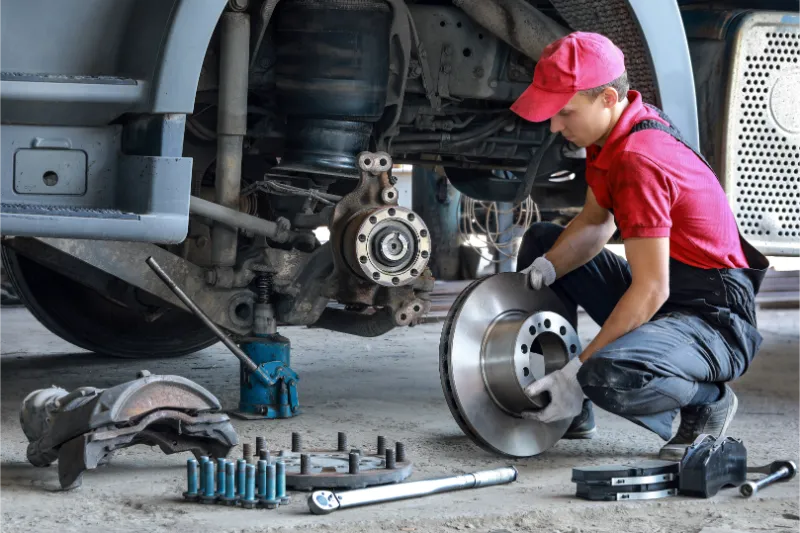
The hilly terrain, frequent freeze-thaw cycles, and heavy commuter traffic on Route 611 and Route 202 all contribute to faster brake wear for Doylestown drivers. Road salt used during Bucks County winters increases the risk of corrosion on brake lines and calipers, making regular inspections even more important.
What Our Customers Say


Common Questions About Brake Repair and Safety Inspection
How much does brake repair cost in Doylestown, PA?
Brake repair costs in Doylestown, PA, depend on the specific issue, parts required, and the extent of the work needed. Every quote is written before work begins, and no repair is approved without your sign-off on the specific line items.
How do I know if my brake pads need replacing?
The clearest signs that your brake pads may need replacing include a high-pitched squeal from the wear indicator, longer stopping distances, or a grinding sound during braking. If your pads measure below 3mm of remaining friction material, replacement is due, and our Digital Vehicle Inspection includes a photograph of the actual measurement.
How long does a brake repair take?
Most pad and rotor jobs take two to three hours per axle once the vehicle is in the bay, and same-day turnaround is standard for straightforward repairs. Caliper replacement, brake line repair, or ABS module work can push a job to a full day, and we offer loaner cars if the timing is tight.
Should I replace brake pads and rotors together?
Replacing pads and rotors together is often the right call when the rotors are near or below minimum thickness, warped, or heavily scored. If the rotors measure above minimum and show no runout, resurfacing or reusing them with new pads is acceptable, and we document the measurement either way.
How often should brake fluid be flushed?
Most manufacturers recommend a brake fluid flush every two to three years, or sooner if moisture content tests above 3%. Bucks County’s freeze-thaw cycles can increase moisture exposure in the reservoir over time. This is why we test fluid condition at every brake service rather than waiting on a calendar interval.
Schedule Your Brake Repair and Safety Inspection Service in Doylestown Today
Worn brakes can progress quickly, and the difference between a pad service and a larger rotor or caliper repair often comes down to early inspection. If your brake pedal feels soft, your steering wheel shakes during braking, or your inspection sticker is due soon, schedule a measured brake inspection with Epoch Automotive. We will document the findings and explain the required work before any parts are replaced.
Epoch Automotive | 243 Harvey Ave Ste 102, Doylestown, PA 18901 | (267) 406-4922
Qualifying brake work is backed by our warranty, and every repair includes photograph-documented findings and a written estimate before we begin.