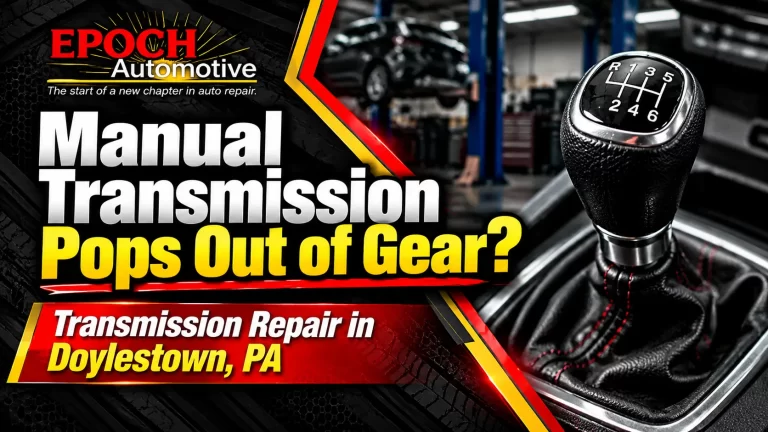
When a manual transmission pops out of gear, the selected ratio is not staying fully engaged under load. The shifter may jump into neutral during acceleration, coasting, or a bump. Possible causes include linkage, mounts, bearings, shift forks, or internal engagement parts.
Epoch Automotive provides transmission repair in Doylestown, PA, for manual, automatic, and CVT vehicles. Our testing reproduces the symptom before any repair is recommended.
What It Means When a Manual Transmission Pops Out of Gear
Popping out of gear means the transmission cannot hold one selected ratio securely. A healthy shift moves the synchronizer sleeve and engagement teeth together. Wear, incomplete engagement, or shaft movement can push them apart.
The affected gear and timing provide clues. Leaving second gear during acceleration may indicate a different problem than leaving fourth while coasting. Neither behavior is normal shifter movement.
Common Causes of Gear Disengagement
The most common gear disengagement causes prevent full engagement or move parts after the shift. External components should be checked before internal repair is assumed.
Worn Engagement Teeth, Hubs, or Shift Forks
Worn engagement teeth may develop rounded edges that no longer hold the sleeve. A damaged hub, sleeve, detent, or shift fork can also prevent full engagement. These faults often affect one gear.
A worn synchronizer ring more often causes grinding or difficult shifts, but related assembly wear can prevent complete engagement. Internal inspection may be needed when external checks point to one gear set.
Shift Linkage, Cable, or Shifter Wear
Linkage or cable wear can keep the shift rail from reaching its full position. Loose bushings, poor adjustment, or shifter damage may leave a gear partly selected. These faults may not require a rebuild.
Worn Bearings, Shafts, or Mounts
Worn bearings can allow excess shaft movement, or end play, as load changes. This may separate engaged parts. Damaged engine or transmission mounts can also pull on linkage or cables.
Low, Incorrect, or Contaminated Fluid
Low or incorrect lubricant can worsen shifting problems, increase heat, and accelerate bearing wear. It may not be the only cause, but a leak or wrong fluid can accelerate damage. Use the exact specified lubricant.
What to Do When the Shifter Jumps Out of Gear
Reduce load and arrange an inspection instead of forcing the shifter to stay engaged. Losing drive can be hazardous in Route 611 traffic or at an intersection.
Reduce Load and Do Not Hold the Lever in Place
Do not hold the gear in place with the shifter. Constant pressure can load the fork, sleeve, and linkage while masking the fault. If the gearbox repeatedly disengages, grinds, leaks, or will not select a gear, park safely.
Record When the Symptom Happens
Note the affected gear and whether it disengages during acceleration, coasting, bumps, or cold operation. Record grinding, lever movement, pedal changes, vibration, or leaks. These details help reproduce an intermittent problem.
How a Shop Diagnoses the Problem
A correct diagnosis separates external adjustment or mount trouble from internal wear. Manual gearboxes may not store a useful fault code, so a scan alone cannot confirm the cause.
Road-Test the Vehicle and Inspect External Parts
The technician can road-test the vehicle, then inspect the shifter, linkage, bushings, mounts, and clutch. This clutch and transmission diagnosis checks full gear selection and powertrain movement.
Our clutch repair and replacement service supports related checks when the pedal changes, the clutch drags, or shifts grind. We service manual Honda, Toyota, Ford, Chevrolet, Subaru, Volkswagen, and other platforms.
Check Fluid Condition and Internal Wear
Fluid level, specification, leaks, debris, and lubricant condition may reveal wear. If external parts are sound, testing may include shaft play and the rail, fork, detent, hub, sleeve, bearings, and engagement teeth.
Repair may involve linkage adjustment, mounts, bearings, or an internal overhaul. Our Scion repair service in Doylestown, PA, specifically includes clutch wear on manual FR-S models, showing why model-specific inspection matters.
Can a Clutch Cause the Transmission to Pop Out of Gear?
A clutch fault does not usually push a fully engaged transmission out of gear. Drag or release trouble more often causes grinding or hard selection. However, it can make a shift feel complete before the gear is fully selected.
Because symptoms overlap, manual transmission repair should include a clutch check. Pedal feel, release travel, road-test results, and the affected gear help separate the systems.
How Doylestown Driving Can Affect the Symptom
Doylestown driving can reveal an existing fault without causing it. Borough traffic, Bucks County grades, and freeze-thaw pavement may expose worn linkage, mounts, or marginal engagement. Cold lubricant can make early shifts stiffer.
Rough pavement does not prove it caused internal damage. It may provide the movement that exposes wear. Our auto repair in Doylestown, PA, service covers manual transmission, drivetrain, and clutch diagnostics.
Before winter travel, PennDOT winter preparation guidance recommends checking fluid levels and addressing vehicle problems. Resolve a gearbox that will not stay engaged before winter conditions add risk.
Takeaways
A manual transmission may disengage because of linkage wear, damaged mounts, shaft movement, or internal gear and synchronizer wear. Low or incorrect fluid can worsen the condition.
Do not hold the shifter in place or keep driving through repeated disengagement. Note when it occurs, then check the controls, clutch, lubricant, mounts, and internal parts in order.
Frequently Asked Questions
Why does my manual transmission pop out of gear?
Your manual transmission may pop out of gear because the gear is not fully engaging or cannot remain engaged under load. Worn teeth, a damaged hub or fork, linkage trouble, bearing play, or failed mounts are common possibilities.
Can low transmission fluid make a manual transmission pop out of gear?
Yes, low transmission fluid can contribute to a manual transmission popping out of gear by increasing heat, friction, and bearing wear. However, repeated disengagement from one gear often requires checking linkage, mounts, shaft movement, and internal engagement parts too.
Is it safe to keep driving if the shifter jumps into neutral?
No, repeated gear disengagement is not safe to ignore because the vehicle can lose drive without warning. Reduce load, avoid busy roads, and park the vehicle if the symptom repeats, grinding starts, or a fluid leak appears.
Can a bad clutch cause a transmission to pop out of gear?
A bad clutch can contribute to a manual transmission popping out of gear, but it is not the usual cause once a gear is fully engaged. Clutch drag or release trouble can make gear selection incomplete, so the clutch should still be checked during diagnosis.
Does popping out of one gear mean the transmission needs replacement?
No, popping out of one gear does not automatically mean the entire transmission needs replacement. The repair may involve linkage, bushings, mounts, a shift fork, bearings, or selected internal parts, depending on measured wear.
Schedule Manual Transmission Diagnosis in Doylestown
If your shifter jumps into neutral, contact Epoch Automotive before the symptom becomes more frequent. We can inspect the linkage, mounts, clutch operation, fluid, shaft movement, and internal engagement concerns, then explain the findings and repair options.
Schedule a visit with our Doylestown shop or call (267) 406-4922. Our shop is located at 243 Harvey Ave Suite 102, Doylestown, PA 18901.