Poor gas mileage can stem from various factors. Mechanical issues, such as faulty oxygen sensors and clogged fuel injectors, hinder combustion efficiency. Neglecting maintenance, such as dirty air filters and worn spark plugs, further degrades performance. Additionally, low tire pressure and wheel alignment issues increase resistance and cause the vehicle to burn more fuel. Driving habits, such as aggressive acceleration and taking short trips, can also impact efficiency. Stick around to uncover more insights that can help boost your miles per gallon.
Key Takeaways
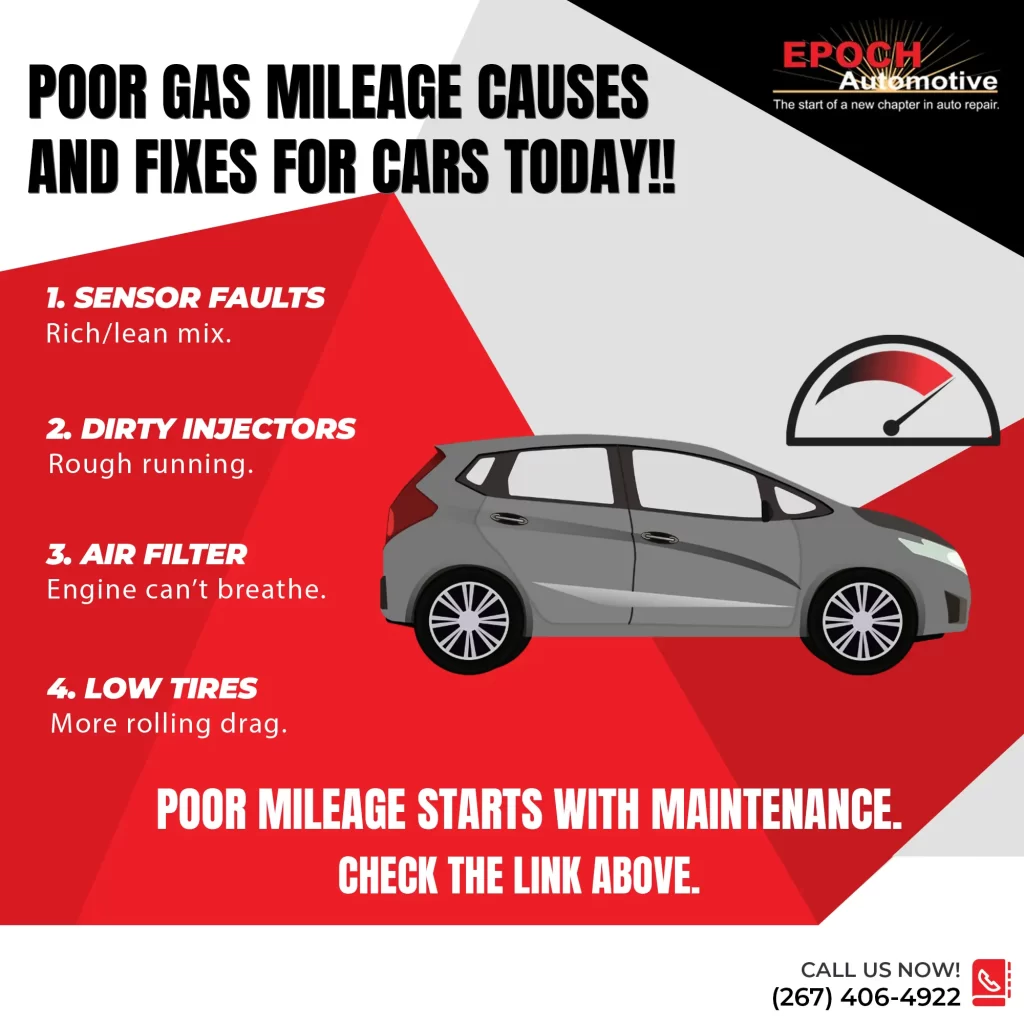
- Faulty oxygen sensors and clogged fuel injectors disrupt fuel delivery and combustion, leading to decreased gas mileage.
- Low tire pressure and poor wheel alignment increase rolling resistance, reducing fuel efficiency.
- Aggressive driving habits, including rapid acceleration and hard braking, waste fuel and diminish overall mileage.
- Short trips prevent engines from reaching their optimal operating temperatures, resulting in inefficient fuel combustion and increased wear.
- Ignoring warning lights can indicate underlying issues affecting fuel economy, leading to further inefficiencies and costly repairs.
Mechanical Issues That Hurt Fuel Efficiency
When it comes to fuel efficiency, mechanical issues can be a real game-changer. A faulty oxygen sensor or engine misfire can significantly impact how well your vehicle performs, while clogged fuel injectors may result in a rough ride. Addressing these problems and considering engine diagnostics early can save you at the pump and keep your car running smoothly.
Faulty oxygen sensor and engine misfires
A faulty oxygen sensor can significantly impact your vehicle’s fuel efficiency, leading to decreased gas mileage. This sensor monitors the amount of oxygen in your exhaust and helps adjust the air-fuel mixture for ideal combustion. When it malfunctions, your engine may run too rich or too lean, causing poor fuel efficiency. You might notice engine misfires, rough idling, or even stalling, which can further diminish your gas mileage. Addressing a faulty oxygen sensor quickly is essential, as prolonged issues can lead to more significant engine problems and costly repairs. Regular maintenance and diagnostics can help catch these issues early, ensuring your vehicle runs smoothly and efficiently. Don’t ignore the signs—check your oxygen sensor if you’re experiencing poor fuel efficiency.
Clogged fuel injectors and rough running
Clogged fuel injectors can wreak havoc on your vehicle’s performance and fuel efficiency. When these injectors get blocked, they can’t deliver the proper amount of fuel to your engine, leading to rough running and poor combustion. You might notice your car hesitating or stalling, especially during acceleration. This not only affects how your vehicle drives but also causes it to consume more fuel than necessary. If you’re experiencing decreased mileage or rough running, it’s vital to have your fuel injectors checked. Regular maintenance, like fuel system cleaning, can help prevent clogging and keep your engine running smoothly. Addressing clogged fuel injectors early can save you money and boost your car’s overall performance.
Maintenance Problems That Reduce MPG
If your gas mileage isn’t what it should be, maintenance issues might be to blame. A dirty air filter can choke your engine, while outdated spark plugs can lead to inefficient combustion. Regular tune-ups can make a significant difference in your vehicle’s fuel efficiency.
Dirty air filter affecting gas mileage
While you might not think about it often, a dirty air filter can significantly impact your vehicle’s gas mileage. When your air filter is clogged with dirt and debris, it restricts airflow to the engine. This means your engine has to work harder to draw in the air it needs for combustion, leading to inefficient fuel usage. You may notice a decrease in power and acceleration, which often translates to lower fuel efficiency, or miles per gallon. By regularly checking and replacing your air filter, you can guarantee peak airflow and improve your vehicle’s efficiency. Don’t let a dirty air filter affect your gas mileage—stay proactive with your maintenance to keep your engine running smoothly and your fuel costs down.
Need for tune-ups and spark plug replacement
Regular tune-ups and timely spark plug replacements are essential for maintaining peak gas mileage in your vehicle. When your engine isn’t operating efficiently due to worn or dirty spark plugs, it can lead to poor combustion, resulting in decreased fuel efficiency. A proper tune-up will guarantee that all engine components, including ignition timing and fuel delivery, are in prime condition. If you’re in Doylestown, PA, consider scheduling a tune-up and spark plug replacement to get your vehicle running smoothly again. Failing to address these maintenance tasks can result in increased fuel consumption and higher pump costs. Don’t wait too long; proactive maintenance can save you money and enhance your driving experience. Keep your car in top shape for better MPG!
Tire, Brake, and Alignment Issues
If your tires aren’t properly inflated, you could be losing gas mileage without even realizing it. Additionally, brake drag and poor wheel alignment can increase rolling resistance, making your vehicle work harder and consume more fuel. Addressing these issues can lead to noticeable improvements in your MPG.
Low tire pressure and MPG loss
Low tire pressure can considerably impact your vehicle’s fuel efficiency, leading to a noticeable drop in miles per gallon (MPG). When your tires aren’t properly inflated, they create more rolling resistance, which forces your engine to work harder. This added strain can result in low tire pressure and MPG loss, making it essential to check your tire pressure regularly. Maintaining the correct pressure not only improves fuel efficiency but also enhances overall safety and tire lifespan. You can easily find the recommended pressure in your owner’s manual or on a sticker inside the driver’s side door. So, don’t overlook this simple maintenance task—keeping your tires inflated can help you save money at the pump and improve your driving experience.
Brake drag and wheel alignment problems increasing rolling resistance
Tire maintenance is just one part of the equation when it comes to fuel efficiency. Brake drag and wheel alignment issues can significantly increase rolling resistance, resulting in reduced fuel economy due to brake drag. When your vehicle’s brakes don’t release fully, or the wheels aren’t aligned properly, your engine has to work harder, which consumes more fuel.
Consider these points:
- Brake drag: Sticking brakes leads to constant friction, wasting fuel.
- Wheel alignment: Misalignment causes tires to drag, increasing resistance.
- Regular checks: Routine inspections can help catch these issues early.
Addressing these problems not only improves your gas mileage but also extends the life of your vehicle. Don’t overlook the importance of brake and alignment maintenance!
Warning Lights and Hidden Engine Problems
If your check engine light is on, it could be a sign of hidden engine problems that are affecting your gas mileage. Ignoring this warning can lead to decreased fuel efficiency and more costly repairs down the line. Getting a diagnostic check can uncover these issues and help you get back on the road with better MPG.
Check engine light on and bad MPG
When the check engine light comes on, it often signals underlying issues that can lead to poor gas mileage. Ignoring this warning can result in significant fuel inefficiency and costly repairs down the road. Here are a few common problems linked to a check engine light on and bad MPG:
- Faulty oxygen sensors: These can cause your engine to run richer than necessary, wasting fuel.
- Dirty air filters: A clogged filter limits airflow, reducing engine performance and efficiency.
- Fuel system leaks: Any leaks can lead to a drop in fuel pressure, resulting in poor combustion.
Addressing these issues promptly can help restore your vehicle’s fuel efficiency and prevent further damage.
How diagnostics uncover fuel efficiency issues
Ignoring the check engine light can lead to more than just poor gas mileage; it can mask deeper issues within your engine. When that light illuminates, it’s a cry for help, indicating potential problems that could be affecting your fuel efficiency. Using Epoch Automotive diagnostics for poor MPG, technicians can pinpoint the root causes of these issues. They’ll assess factors such as fuel injectors, spark plugs, and exhaust systems to guarantee everything’s functioning at its best. Regular diagnostics not only help you save on fuel costs but also prolong the lifespan of your vehicle. Don’t wait for minor problems to become costly repairs; addressing issues early can lead to a more efficient engine and better gas mileage in the long run.
Driving Habits and Usage Patterns
Your driving habits can significantly impact your gas mileage, often without you even realizing it. Frequent short trips or aggressive driving can waste fuel and affect the efficiency of hybrid vehicles. Let’s explore how these patterns can lead to poor fuel economy and what you can do to improve it.
Driving habits that waste fuel
How often do you find yourself accelerating rapidly or hitting the brakes hard? These driving habits that waste fuel can significantly impact your gas mileage. By adjusting your driving style, you can enhance efficiency and reduce fuel costs. Here are a few habits to think about changing:
- Aggressive acceleration: Speeding up too quickly can lead to excessive fuel consumption.
- Hard braking: Slamming on the brakes wastes energy that could’ve been used more efficiently.
- Frequent lane changes: Constantly switching lanes can increase fuel usage due to varying speeds.
Impact of short trips and hybrid vehicle fuel economy issues
Although short trips may seem convenient, they can significantly affect your vehicle’s fuel economy, especially in hybrid models. When you frequently drive only a few miles, your engine doesn’t reach its ideal operating temperature, leading to inefficient fuel combustion. This inefficiency is particularly pronounced in hybrids, which rely on battery power for short distances. The impact of short trips on gas mileage is significant, as the vehicle’s systems aren’t able to work as intended. Additionally, short trips can cause wear and tear, leading to increased maintenance costs. To improve your fuel economy, consider combining errands into one trip or opting for public transportation when possible. Making these changes can enhance your vehicle’s efficiency and save you money at the pump.
Restore Better Fuel Economy with Epoch Automotive in Doylestown, PA
If you’ve noticed a decline in your vehicle’s fuel economy, Epoch Automotive in Doylestown, PA, is here to help. Our ASE-certified technicians understand the common causes of bad fuel economy and can restore your vehicle’s efficiency with expert care.
Here’s how we can assist you:
- Comprehensive diagnostics to identify issues like clogged fuel injectors or faulty sensors.
- Routine maintenance services, including oil changes and tire rotations, to guarantee peak performance.
- Advanced technology for repairs that tackle underlying problems affecting fuel efficiency.
Don’t let poor gas mileage frustrate you any longer. Visit Epoch Automotive today, and let us help you get back on the road with better fuel economy and peace of mind.
Frequently Asked Questions
How Does Weather Affect My Vehicle’s Fuel Efficiency?
The weather can considerably affect your vehicle’s fuel efficiency. Cold temperatures can increase engine workload, while strong winds create resistance. Additionally, using air conditioning in hot weather can also lead to decreased mileage.
Can the Type of Fuel Impact Gas Mileage?
If you’ve ever felt the sting at the pump after switching fuels, it’s no surprise that the type of fuel can impact gas mileage. Higher octane fuels might enhance performance, but they won’t always boost efficiency.
What Role Does Vehicle Weight Play in Fuel Consumption?
Vehicle weight considerably affects fuel consumption; the heavier your car, the more energy it needs to accelerate. By reducing unnecessary weight, you can improve your vehicle’s efficiency and ultimately save on fuel costs.
Are There Specific Engine Types That Are More Efficient?
Yes, certain engine types, like turbocharged and hybrid engines, tend to be more efficient. They maximize power while consuming less fuel, allowing you to save on gas and reduce emissions during your drives.
How Often Should I Check My Air Filter for Optimal MPG?
You should check your air filter every 12,000 to 15,000 miles, or more frequently if you drive in dusty conditions. A clean air filter helps your engine run efficiently, improving overall performance and fuel economy.
Conclusion
In the quest for better gas mileage, don’t let your vehicle become a money pit. By addressing mechanical issues, keeping up with maintenance, and fine-tuning your driving habits, you can watch your fuel efficiency soar like an eagle. If you’re still struggling, remember that help is just around the corner at Epoch Automotive in Doylestown, PA. Don’t wait for those warning lights to blink; take action today and enjoy the savings at the pump!