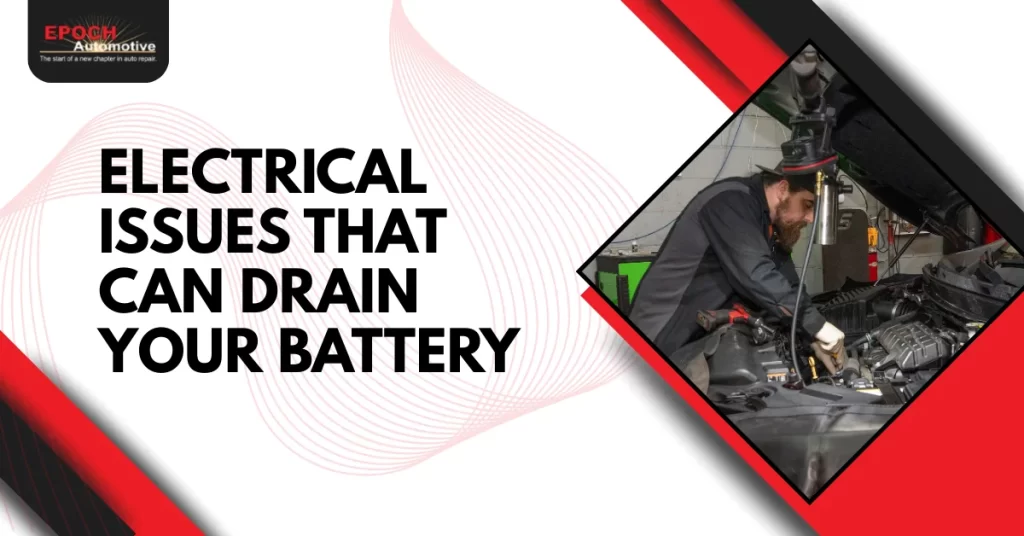
Electrical issues can drain your battery without you even realizing it. Things like leaving interior lights on or using phone chargers can quickly zap your power. Faulty wiring and bad ground connections may also cause unexpected drainage. Additionally, aftermarket accessories, such as high-powered audio systems or improperly wired LED lights, can contribute to the problem. Awareness of these issues is essential, and you’ll discover even more insights about managing battery health and preventing future issues with auto electrical repair.
Key Takeaways
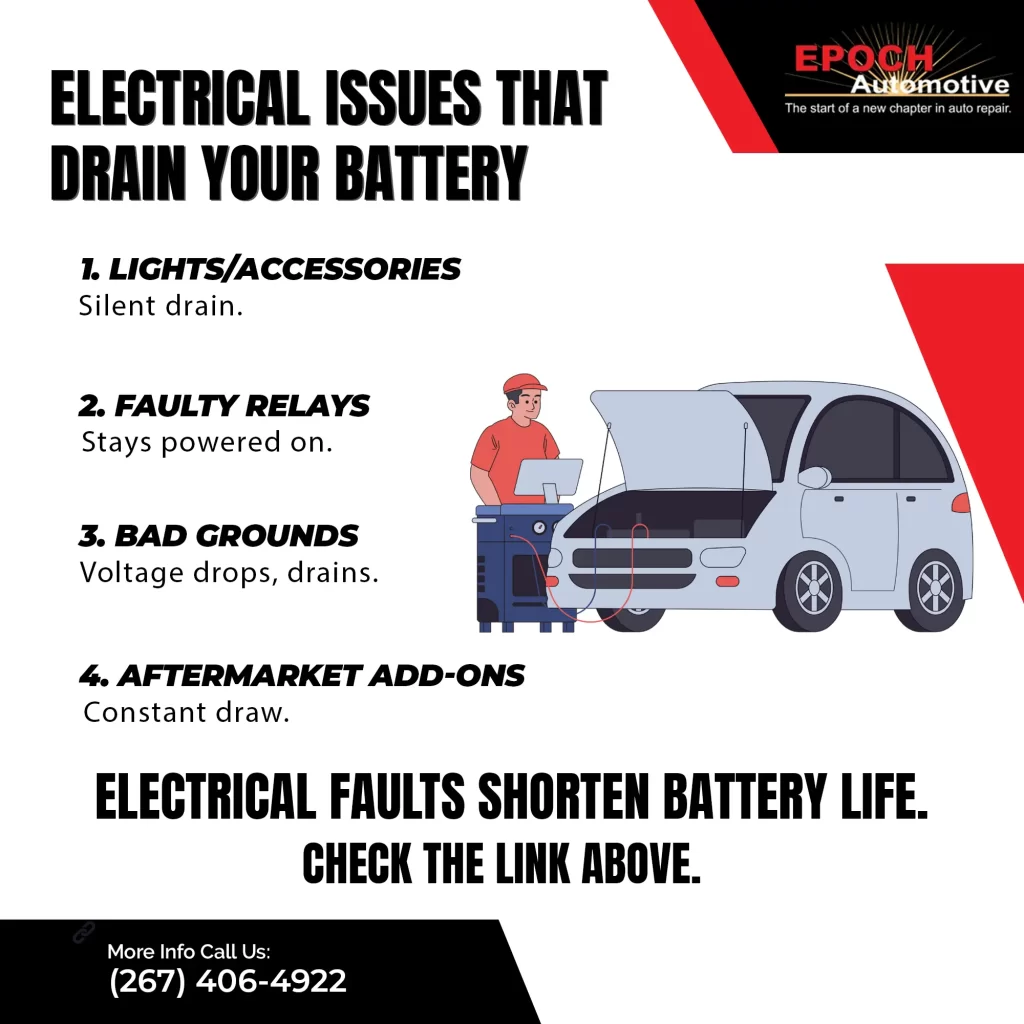
- Leaving interior lights on or using accessories like chargers can lead to rapid battery drain overnight.
- Faulty relays or control modules may cause components to stay powered longer than necessary, draining the battery.
- Bad ground connections and corroded terminals can disrupt electrical circuits, leading to unexpected battery drainage.
- Aftermarket accessories, such as high-powered audio systems or improperly wired LED lights, may continue to draw power when the vehicle is off.
- Dashboard warning lights and dimming headlights can signal electrical issues that may contribute to battery drainage.
Common Causes of Parasitic Battery Drain
You might be surprised by how easily your battery can drain when you leave interior lights on or have accessories drawing power. Faulty relays or control modules can also contribute to this issue by staying powered longer than they should. Understanding these common causes can help you prevent unexpected battery failures.
Interior lights left on and accessories drawing power
While it might seem harmless to leave your interior lights on for a short while, doing so can quickly lead to a drained battery. Interior lights left on can draw a significant amount of power, especially if they’re forgotten overnight. This constant power draw can deplete your battery’s charge, leaving you stranded when you need your vehicle the most. Additionally, other accessories, like phone chargers or GPS devices, can also contribute to battery drain when they’re plugged in for extended periods. It’s essential to make it a habit to turn off your interior lights and unplug accessories before leaving your car. By staying vigilant, you can avoid the frustrating experience of a dead battery due to these seemingly minor oversights.
Faulty relays or control modules staying powered
When relays or control modules malfunction, they can inadvertently stay powered on, leading to a slow drain on your battery. A faulty relay or module staying powered keeps specific systems active even when you think your vehicle is off. This can happen due to wear and tear, moisture intrusion, or manufacturing defects. Symptoms might include dimming lights or an unexpected dead battery after a few days of inactivity. To identify this issue, you can use a multimeter to check for current draw when the vehicle is supposed to be off. If you suspect a faulty relay or module, it’s best to consult a professional technician who can diagnose and resolve the issue efficiently, ensuring your battery stays charged.
Charging System Problems That Mimic Battery Failure
If your battery keeps dying, it might not just be a battery issue. Sometimes, the alternator isn’t charging it properly, making it seem like the battery is at fault. To get to the bottom of it, you’ll want to test the battery, starter, and alternator together.
Alternator not charging the battery properly
Although you might think a dead battery is the culprit behind your car’s starting troubles, it could actually be an alternator that isn’t charging properly. When the alternator fails to charge the battery effectively, you’ll notice symptoms like dimming lights, a whining noise, or warning lights on your dashboard. If you’re experiencing these issues, it’s essential to check if the alternator is functioning correctly. An alternator that fails to charge the battery properly can lead to a drained battery, leaving you stranded. Sometimes, the problem might stem from a loose connection, a faulty voltage regulator, or worn-out components within the alternator itself. Don’t ignore these signs—addressing them promptly can save you from future hassle and costly repairs.
Testing the battery, starter, and alternator together
While it may seem like a straightforward issue, battery failure can often be mistaken for problems related to the starter or alternator. To effectively diagnose the problem, consider testing the battery, starter, and alternator together. Here are three steps to follow:
- Check the Battery Voltage**: Use a multimeter to confirm your battery is holding a charge.
- Inspect the Starter: Listen for any clicking sounds when you turn the key; this might indicate a starter issue.
- Evaluate the Alternator Output: Verify that the alternator is charging the battery correctly, typically within the range of 13.7 to 14.7 volts.
Wiring and Grounding Issues
Wiring and grounding issues can be sneaky culprits behind a drained battery. If you’ve got bad ground connections or short circuits in your vehicle’s wiring harness, they can create unexpected power drains. It’s essential to keep an eye on these issues to ensure your battery stays healthy and reliable.
Bad ground connections draining the car battery
Ground connections play a crucial role in your vehicle’s electrical system, and when they’re faulty, they can unexpectedly drain your car’s battery. A bad ground connection draining your car battery can lead to various issues you might not even notice. Here are three key signs to watch for:
- Dimming lights: If your headlights or dashboard lights flicker or dim, it may indicate a grounding problem.
- Electrical glitches: Malfunctions in your vehicle’s electronics may indicate a faulty ground connection.
- Corrosion buildup: Check for rust or corrosion at ground connection points, as this can disrupt the circuit and drain your battery.
Addressing these issues promptly can save you from being stranded with a dead battery. Don’t ignore the warning signs!
Short circuits in the vehicle wiring harness
When electrical currents take unintended paths, short circuits can occur in the vehicle’s wiring harness leading to significant battery drainage. A short circuit in a vehicle wiring harness often happens due to frayed wires, damaged insulation, or loose connections. These issues can create an unintended connection, allowing the current to bypass its intended route. As a result, your battery might work overtime, draining its power faster than usual. You might notice dimming lights or electrical components malfunctioning. To prevent these problems, it’s essential to have your wiring inspected regularly. If you suspect a short circuit, don’t hesitate to consult a professional. Addressing these issues promptly can save you from more extensive repairs and guarantee your vehicle’s electrical system functions properly.
Aftermarket and Advanced Vehicle Electrical Concerns
When you add aftermarket accessories to your vehicle, you might unknowingly create a battery draw that can drain your power over time. This is especially true for hybrid and electric cars, where the 12V system can have its own unique challenges. Understanding these issues can help you maintain a healthy battery and keep your vehicle running smoothly.
Aftermarket accessories causing battery draw
While aftermarket accessories can enhance your vehicle’s functionality and style, they can also create unexpected electrical issues that may drain your battery. If you’ve added any of the following, you might be experiencing battery draw:
- High-powered audio systems – They often require more power, even when the car is off.
- LED lights – If improperly wired, they may stay on, draining your battery overnight.
- GPS and dash cams – These devices can continue to draw power when the vehicle’s off.
It’s crucial to verify that any aftermarket accessories are installed correctly to avoid issues like these. If you suspect aftermarket accessories causing battery draw, it’s wise to consult with a professional to keep your vehicle running smoothly.
Hybrid and EV 12V system issues
As hybrid and electric vehicles (EVs) rely heavily on a 12V electrical system alongside their high-voltage battery, issues can arise that may lead to battery drain. You might notice that your vehicle’s electrical systems, like lights and infotainment, can be finicky if there’s a problem. Common hybrid and EV 12V system issues include faulty wiring, poor connections, and malfunctioning components, which can lead to an unexpected battery drain. Additionally, if the 12V battery is weak or nearing the end of its lifespan, it can affect the overall performance of your vehicle. Regular inspections and maintenance are essential to identify these issues early, ensuring your hybrid or EV runs smoothly without draining its battery unnecessarily.
Warning Signs of Ongoing Electrical Problems
If you notice dashboard warning lights flickering or find your car battery dying overnight, it’s time to pay attention. These symptoms often indicate underlying electrical issues that could worsen if left unaddressed. Let’s explore what these warning signs mean for your vehicle’s health.
Dashboard warning lights and low voltage symptoms
Have you ever noticed your dashboard lights flickering or dimming unexpectedly? These dashboard warning lights can be a sign of low voltage, indicating potential electrical issues that need your attention. Ignoring these signs might lead to further complications. Here are three symptoms to watch for:
- Flickering dashboard lights – If your lights blink or dim, it could mean your battery isn’t charging properly.
- Weak headlights – Dimming headlights while driving can signal low voltage affecting your vehicle’s electrical system.
- Malfunctioning electronics – If your radio, air conditioning, or other electronic features act erratically, it might be a sign of an underlying electrical problem.
Stay vigilant about these symptoms to prevent further battery drainage!
Car battery keeps dying overnight causes
When your car battery keeps dying overnight, it can be more than just an inconvenience; it often signals ongoing electrical problems that shouldn’t be ignored. One common cause is a parasitic draw, where components like the radio or interior lights remain active when the car is off. Another culprit could be a failing alternator, which doesn’t charge the battery adequately while you drive. Additionally, corroded battery terminals or loose connections can prevent proper charging. A faulty battery itself may also be to blame, especially if it’s old or damaged. It’s essential to investigate the causes of your car battery dying overnight early to avoid being stranded and guarantee your vehicle runs smoothly. Don’t hesitate to seek professional help if needed.
Stop Battery Drain with Professional Electrical Diagnostics at Epoch Automotive
Electrical issues can silently drain your car’s battery, leaving you stranded and frustrated. At Epoch Automotive, we offer expert electrical diagnostics to identify the root cause of your battery troubles. Our parasitic battery drain diagnosis will guarantee you get back on the road without worry.
Here’s what our professional services include:
- Comprehensive testing of your vehicle’s electrical system to pinpoint issues.
- Expert technicians who understand the nuances of various vehicle types guaranteeing accurate diagnosis.
- Transparent pricing and quick turnaround to get you back on track fast.
Don’t let a drained battery ruin your day. Trust Epoch Automotive in Doylestown, PA, to provide the reliable service you need for a stress-free driving experience.
Frequently Asked Questions
How Long Does a Car Battery Typically Last?
A car battery typically lasts around three to five years, depending on usage and maintenance. You should check it regularly, especially if you notice any signs of weakness or difficulty starting your vehicle.
Can Extreme Temperatures Affect Battery Performance?
Just like a snowman melts in the sun, extreme temperatures can seriously affect your battery’s performance. Heat can cause it to drain faster, while cold weather may hinder its ability to start your vehicle efficiently.
What Is a Parasitic Battery Drain?
A parasitic battery drain occurs when electrical components continue to draw power even when your vehicle’s off. It can lead to a dead battery, so it’s essential to check for faulty wiring or malfunctioning devices.
How Can I Test My Battery Health at Home?
To test your battery health at home, you can use a multimeter. Check the voltage; a healthy battery typically reads between 12.4 and 12.7 volts. If it’s lower, consider charging or replacing it.
What Should I Do if My Battery Keeps Dying?
If your battery keeps dying, check connections and look for any lights left on. Consider testing the battery’s health at home or visiting a mechanic to identify underlying issues and get the necessary repairs done.
Conclusion
In the world of car care, keeping an eye on your battery’s health can save you from unexpected detours. By understanding the sneaky culprits of electrical drain and staying attuned to your vehicle’s signals, you can guarantee smooth travels ahead. If you ever feel overwhelmed, remember that a little professional help goes a long way. So, let’s keep those wheels turning and your battery buzzing—because a well-cared-for car is a happy car!