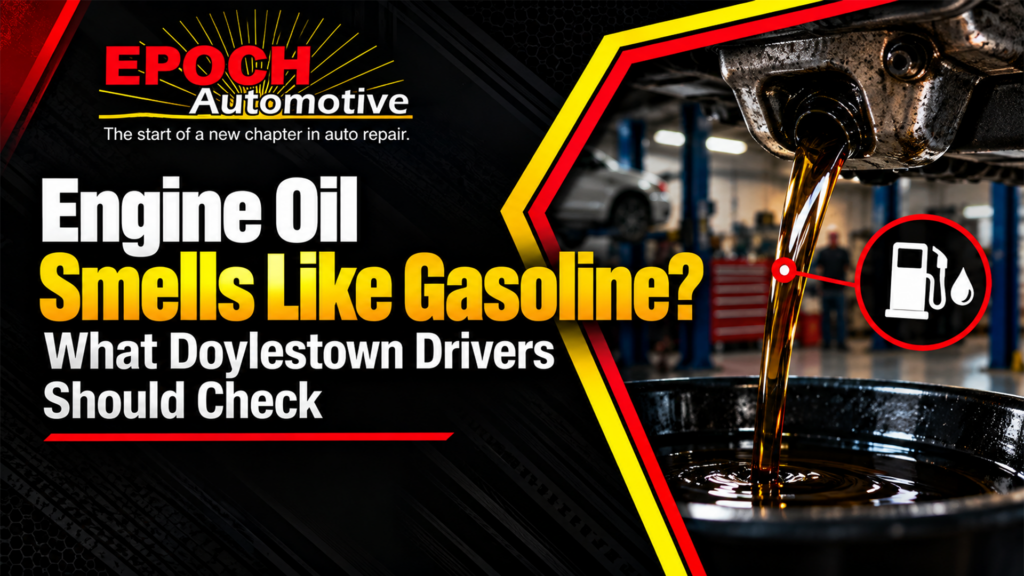
When engine oil smells like gasoline, unburned fuel may be mixing with the oil. A brief odor after cold starts differs from a lasting smell with a rising level or rough running. Because fuel thins lubricant, Epoch Automotive offers engine diagnostics in Doylestown, PA, to identify the source before repairs.
Why Engine Oil Smells Like Gasoline
Gasoline reaches oil when fuel does not burn completely or enters the wrong place. Some can pass the piston rings during cold operation, while persistent contamination may indicate a fault.
Short Trips and Cold Starts
A cold engine often uses a richer mixture until it warms. Some fuel can remain on cylinder walls and pass the rings, while normal oil temperature may help light contamination evaporate.
Doylestown and Chalfont errands may end before the oil warms. PennDOT’s winter vehicle preparation guidance reminds drivers to check fluids and other systems before cold-weather travel.
Rich Running and Misfires
A rich-running engine receives more fuel than it can burn. Sensor faults, coolant-temperature concerns, excess fuel pressure, or another control problem may contribute, but odor alone cannot confirm the cause.
A misfire can leave fuel unburned in a cylinder. Shaking, hard starts, weak power, or poor fuel economy may follow. A flashing check engine light or severe rough running calls for immediate guidance.
Fuel Injector or Pump Problems
A leaking injector can drip after shutdown or overfuel a running engine. On certain direct-injection designs, a mechanical high-pressure pump fault may also reach the crankcase, but this path is not universal.
Testing fuel system symptoms that require professional testing may include pressure checks, injector leak-down tests, and fuel-trim review. Cleaning cannot correct a leaking part or faulty electrical command.
Why Fuel-Diluted Oil Needs Attention
When there is fuel dilution in engine oil, viscosity and protective film strength may fall. Risk depends on the amount, duration, engine load, oil condition, and cause.
Thin Oil and Reduced Protection
Thinned oil may provide less protection to bearings, cylinder walls, timing parts, and turbochargers. Smell and touch cannot measure the dilution percentage, but a clear change from normal is useful.
Replacing contaminated oil does not stop new fuel from entering. After correcting the cause, the shop can choose the proper oil and filter change and any needed follow-up.
Rising Oil Level and Related Warning Signs
Oil rising above the full mark can mean another fluid is entering the crankcase. Fuel is one possibility, while coolant contamination has different causes. Use the owner’s manual checking procedure.
Shut the engine off for an oil-pressure warning. For raw fuel outside the engine, a visible leak, or oil well above maximum, avoid restarting until a professional advises you. These signs differ from a faint dipstick odor.
What Doylestown Drivers Can Check Safely
Check oil on level ground and follow the vehicle’s temperature and wait-time instructions. Note level changes, a new odor, and the current service interval. Never use a flame, smoke nearby, or open fuel system parts.
Record short cold trips, long idling, and Route 611 or 202 traffic. Track hard starts, misfires, fuel-economy changes, warning lights, and recent repairs. These details help separate cold-start enrichment from a fault.
How a Shop Diagnoses Fuel in Engine Oil
Diagnosis starts with oil condition, vehicle history, and a control-module scan. A technician may review misfire counts, fuel trims, coolant temperature, oxygen-sensor data, and fault-code conditions.
Further tests may cover fuel pressure, injectors, spark, compression, crankcase ventilation, or an oil sample when a measured dilution percentage would help. The exact fuel system design determines what applies.
Epoch Automotive services Ford cars, SUVs, and trucks with several gasoline-engine designs. Owners can review Ford repair service in Doylestown, PA, while other supported makes receive engine-specific testing.
A measured process matters when reviewing gas in oil causes. Repairs may address an injector, sensor, thermostat, ignition part, pump, wiring, or another verified fault. Fresh oil then replaces contaminated lubricant.
Takeaways
A gasoline odor may follow cold starts and short trips, while a lasting smell can accompany rich running, misfires, injector leakage, or a design-specific pump fault. Rising oil, rough running, a warning light, or poor fuel economy strengthens the case for testing.
Do not rely on an oil change while fuel keeps entering the crankcase. Document the odor, level, driving conditions, and symptoms, then confirm the cause before planning the service.
Frequently Asked Questions
Can short trips make engine oil smell like gas?
Yes, repeated short trips can contribute because cold-start fuel may reach the oil before the engine fully warms. A persistent odor, rising oil level, or related drivability problem still deserves testing because short trips may not be the only cause.
Is it safe to drive with gasoline in the oil?
Driving risk depends on the amount of fuel and the symptoms present. Stop the engine for an oil-pressure warning, and seek prompt advice for an overfull oil level, strong raw-fuel odor, visible leak, flashing check engine light, or severe rough running.
Will an oil change fix fuel dilution?
No, an oil change removes the contaminated lubricant but cannot correct an active source of fuel. The underlying fault should be diagnosed and repaired, followed by the oil and filter service appropriate for the engine and contamination level.
Can a bad fuel injector put gas in the oil?
Yes, a leaking or overfueling injector can leave excess gasoline in a cylinder, where some may pass the piston rings. Pressure tests, injector tests, scan data, and engine-specific procedures help confirm the fault before replacement.
Why would the engine oil level rise?
The level may rise when fuel or another fluid enters the crankcase. Recheck it using the owner’s manual procedure, and arrange an inspection if it remains above the full mark or continues increasing.
Schedule Engine Diagnostics With Epoch Automotive
If the gasoline smell is new, persistent, or paired with a rising oil level or drivability change, contact our Doylestown shop to schedule testing. Epoch Automotive is located at 243 Harvey Ave, Suite 102, Doylestown, PA 18901. Call (267) 406-4922 and share the oil level, odor, recent driving pattern, and any warning messages you noticed.